An exhibition and assembly explore knowledge, stories and ways of life that resist ideas imposed on the Alentejo.
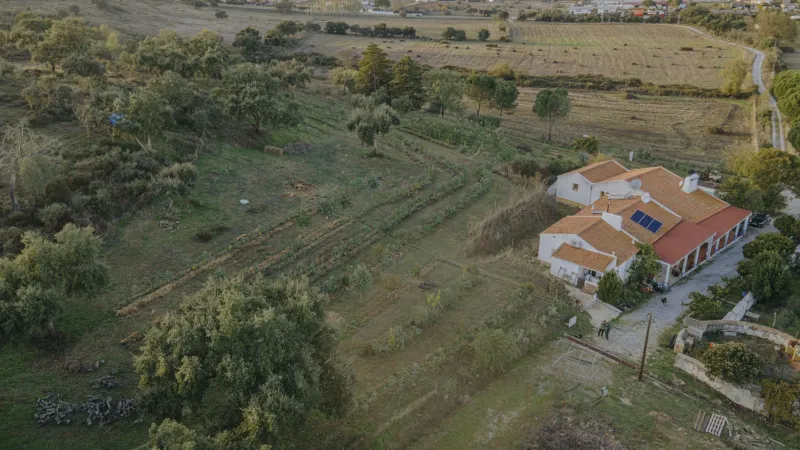
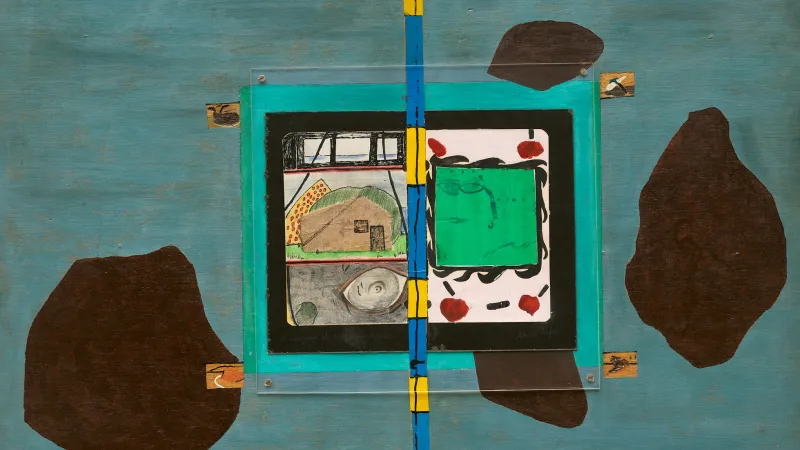
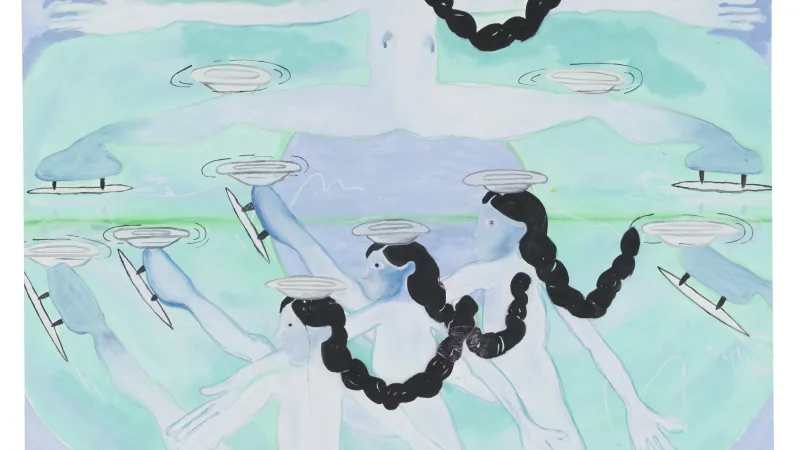
“BODY-NARRATIVE” is an exhibition and an assembly that take as their starting point the idea of the “uncultivated” attributed to the natural and human geography of the Alentejo: land awaiting clearance and people awaiting discipline. This stigma legitimised successive waves of modernisation based on planting and monoculture. Each cycle imposed a precise idea of what should be produced and who should produce it, at the expense of the multiple uses, forms of knowledge and ways of life the land sustained. The project turns towards the entanglement of beings, machines and stories that survived on the margins: something neither entirely natural nor entirely human, made up of disputes and unlikely alliances. Five figures of this “uncultivated” world are called to testify in their own names, like cards in a deck: the Pond, evoking temporary waters, the mud of the heathlands and the region's old uncultivated scrublands; the Maltês, a landless wanderer who crossed those scrublands, sometimes a day labourer, sometimes a vagrant, always outside the law and property ownership; the Hydra, the seven-headed monster from the courtly bestiary of Casas Pintadas, whose severed heads grow back; the Risen One, a bent body that one day stands upright; and the Artist, a farcical character denoting both someone who masters a craft and, in popular speech, a trickster who takes advantage of others — and who therefore also sits in the dock. The location itself also enters this narrative. At Fundação Eugénio de Almeida, where the project takes place, Casas Pintadas (c. 1525) and the former Palácio da Inquisição preserve, side by side, the memory of fable and of judgement. The five figures act as maps: rather than depicting the territory or its past, they help us read them differently. From them unfold the practices of artists, filmmakers, writers, activists, scientists and craftspeople, brought together in a contemporary art exhibition and an open assembly. Participants do not have to respond to the figures: they may follow their own paths, divert them or broaden the field. “BODY-NARRATIVE” thus becomes a space where works, voices and crafts multiply, intersect and contradict one another.