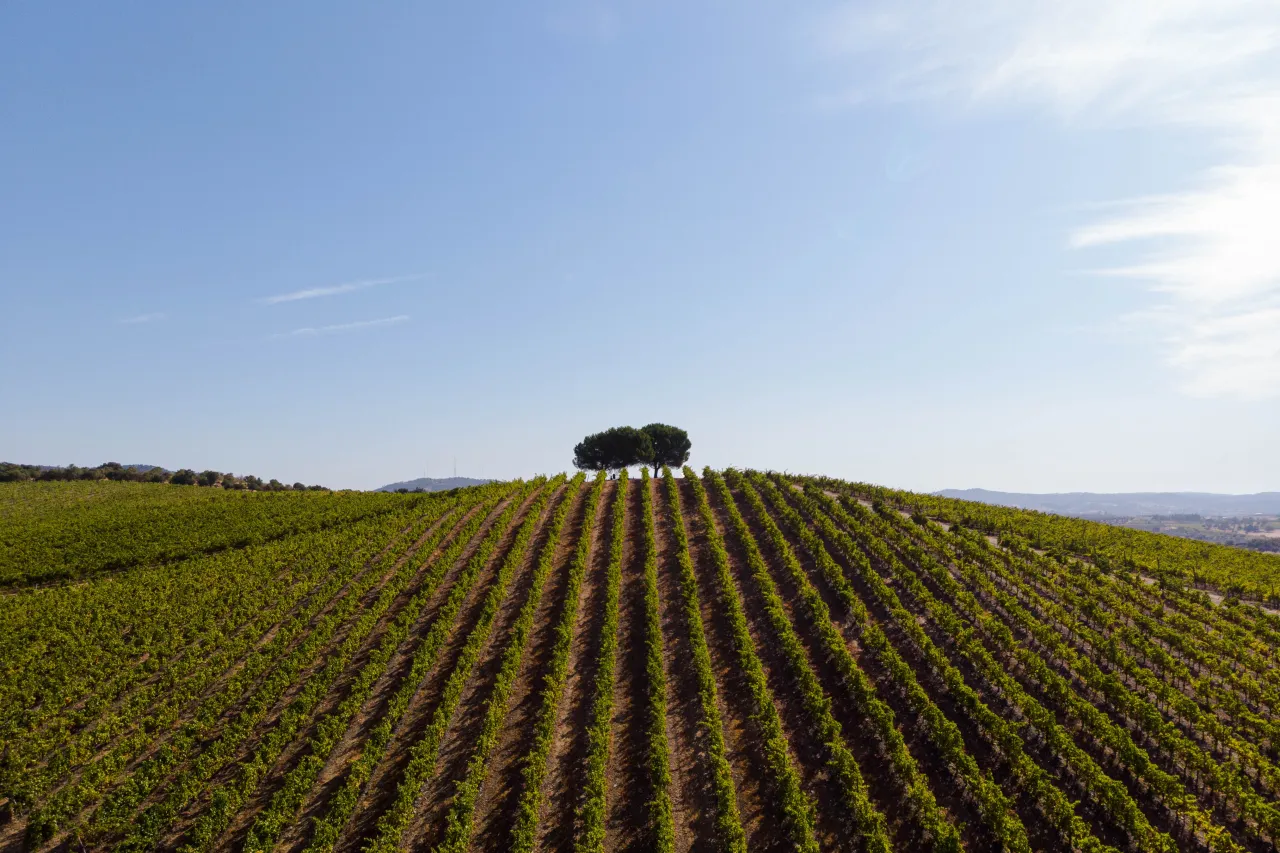
Évora 2027 brings together the city of Évora and the Alentejo as its partner region.
Throughout a history shaped by social, cultural and economic resilience, Évora and the Alentejo have built another way of living and being, of looking at ourselves, at others and at the Universe. We call it VAGAR.
Alentejo's VAGAR is the full awareness that, as human beings, we are always in relationship with everything around us. It questions our position of dominance and calls for coexistence, co-evolution, restraint, creation and construction, space and time, memory and community, as well as resilience and tension.
Rooted in this awareness, which is also an experience and an identity, we want to transform Évora into a living laboratory, full of ideas and solutions for humanity's future. A place that brings Europeans together to reflect on our position in the world. A place that questions, provokes, tests models and shares solutions for a better future in Europe and across the world.
From now until 2027 and beyond, we want to elevate Alentejo's VAGAR, affirming it as a different art of existence for humanity. This way of being and living, these practices that have always existed in the Alentejo, can help us question paradigms and imagine new models; they may offer the future answer humanity needs. With this impulse, we want to open Évora and the Alentejo to the rest of Europe and the world, giving visibility and a voice to this territory and its communities, empowering them and projecting them as relevant to the future.
Through this process and movement, we want to contribute solutions to contemporary European challenges by developing sustainable cultural collaborations at regional, national and international levels, and stimulating social, cultural and economic development.
Built around three thematic lines - Time, Space and Matter - Évora 2027's cultural and artistic programme brings together art and science, artists and audiences, local and global perspectives to raise urgent questions about humanity's future through the concept of VAGAR and its many dimensions. Recognising the culture already present in the Alentejo, the programme presented in the bid book includes a range of projects and may integrate others designed to connect artists and researchers, international and national partners, creators and communities, starting in the region and engaging with Europe and the world. The programme's principles include the idea that less is more, prioritising quality over quantity; sustainability through restraint and cooperation, celebrating Europe's cultural diversity and promoting inclusion and solidarity; making time and space for creation, reflection and thought; bringing tradition together with the contemporary and rethinking heritage; connecting science and art with technological, environmental and social transitions; and breaking down barriers through artistic collaborations at local, national and international scales, taking VAGAR further to test its full potential.