A reflection on Vagar as a practice of attention and respect for all forms of life.
Accustomed to moving through the world according to our own purposes and urgencies, we rarely notice the multitude of lives unfolding around us. A flower, a stone, a tree, an insect or a bird tend to appear as the backdrop to human experience. They are either scenery or instruments of our interests. But what happens when we slow down enough to pay attention to them? Once, when I came across a line of ants crossing a path, I stopped and let them pass. I was surprised by my own care. It was not curiosity, but an ethics of Vagar emerging there, a practice of attention that extends consideration to a wider community of co-inhabitants, certainly beyond the human.
When we slow down, we discover a world populated by presences, trajectories and forms of life that each, in their own way, claim a place in our attention. Perhaps the opposite of acceleration is not slowness, but availability. And perhaps an ethic begins precisely there. — André Barata
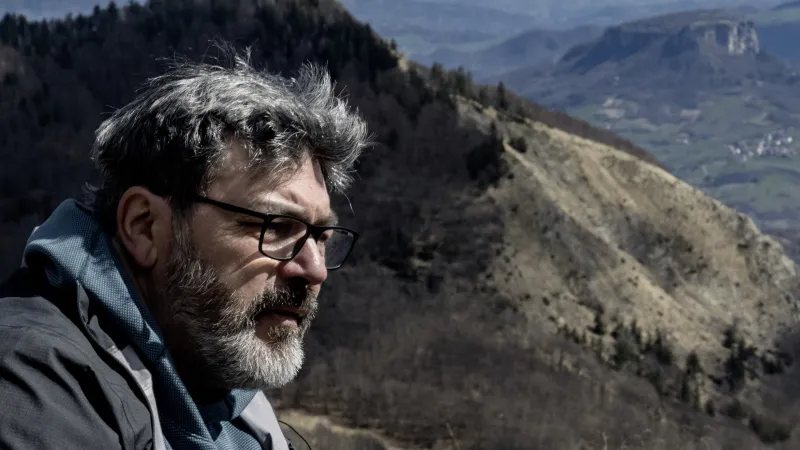
André Barata
Professor at the University of Beira Interior, where he has taught since 2002. He holds a PhD in Contemporary Philosophy from the University of Lisbon (2004) and has held important scientific and educational coordination roles, coordinating the PhD programmes in Philosophy and Political Science, as well as Master's and undergraduate courses in these fields. He was Dean of the Faculty of Arts and Letters (2021–2025). In research, he coordinated the Praxis – Centre for Philosophy, Politics and Culture, was Director of the journal Análise and President of the Portuguese Philosophical Society (2021–2025). His research focuses on social and political philosophy, existential thought and phenomenology. He is the author of several essay collections, notably the trilogy E se parássemos de sobreviver? (2018), O desligamento do mundo (2020) and Para viver em qualquer mundo (2022), and the more recent book Ressonância e Queda (2025). He regularly writes columns for Público and Jornal Económico.
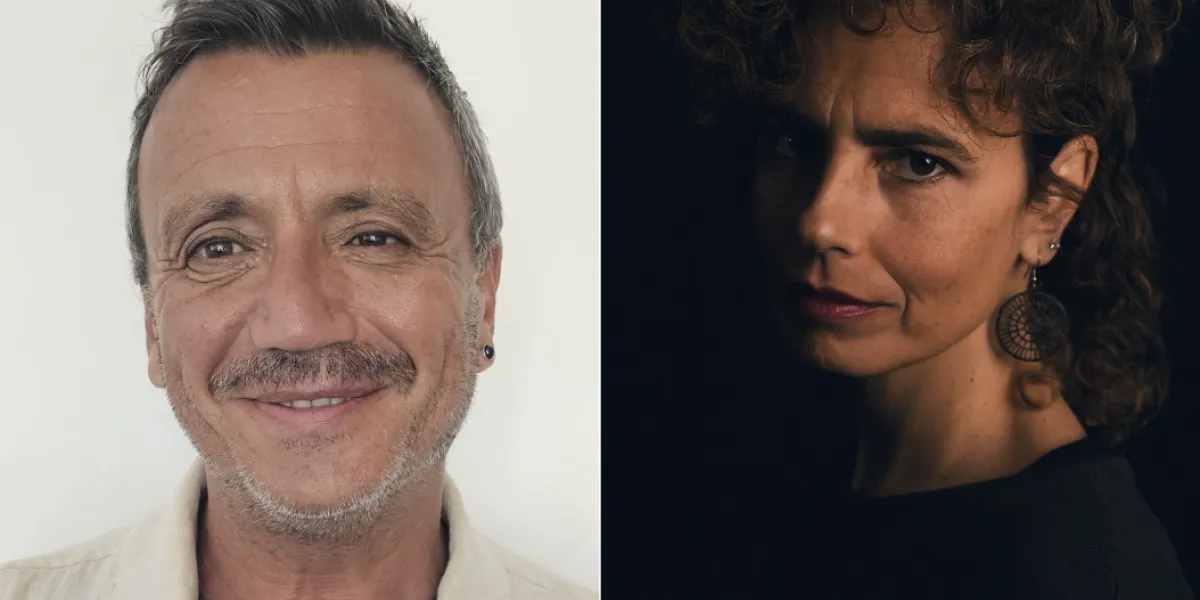
Marta Lança
Lisbon, 1976. Her work brings together critical thought, contemporary artistic practices, postcolonial studies, memory, feminism and cultures of the Global South. She graduated in Portuguese Studies and is a doctoral student in Artistic Studies at FCSH–NOVA University Lisbon. Her career combines research, curating, film, dramaturgy, essays and cultural programming, seeking to build spaces for dialogue between art, politics and the production of knowledge. She is the founder and editorial director of the BUALA website. She also coordinates ReMapping Memories: (Post)colonial Memory Sites and regularly takes part in conferences, juries and programmes dedicated to the relationships between culture, history and social justice. Her practice lies at the intersection of creation and public engagement, exploring ways of imagining more plural political communities through culture.